 NL
NLWhat is emergency reserve capacity (mFRR)?
What is emergency capacity (mFRR)?
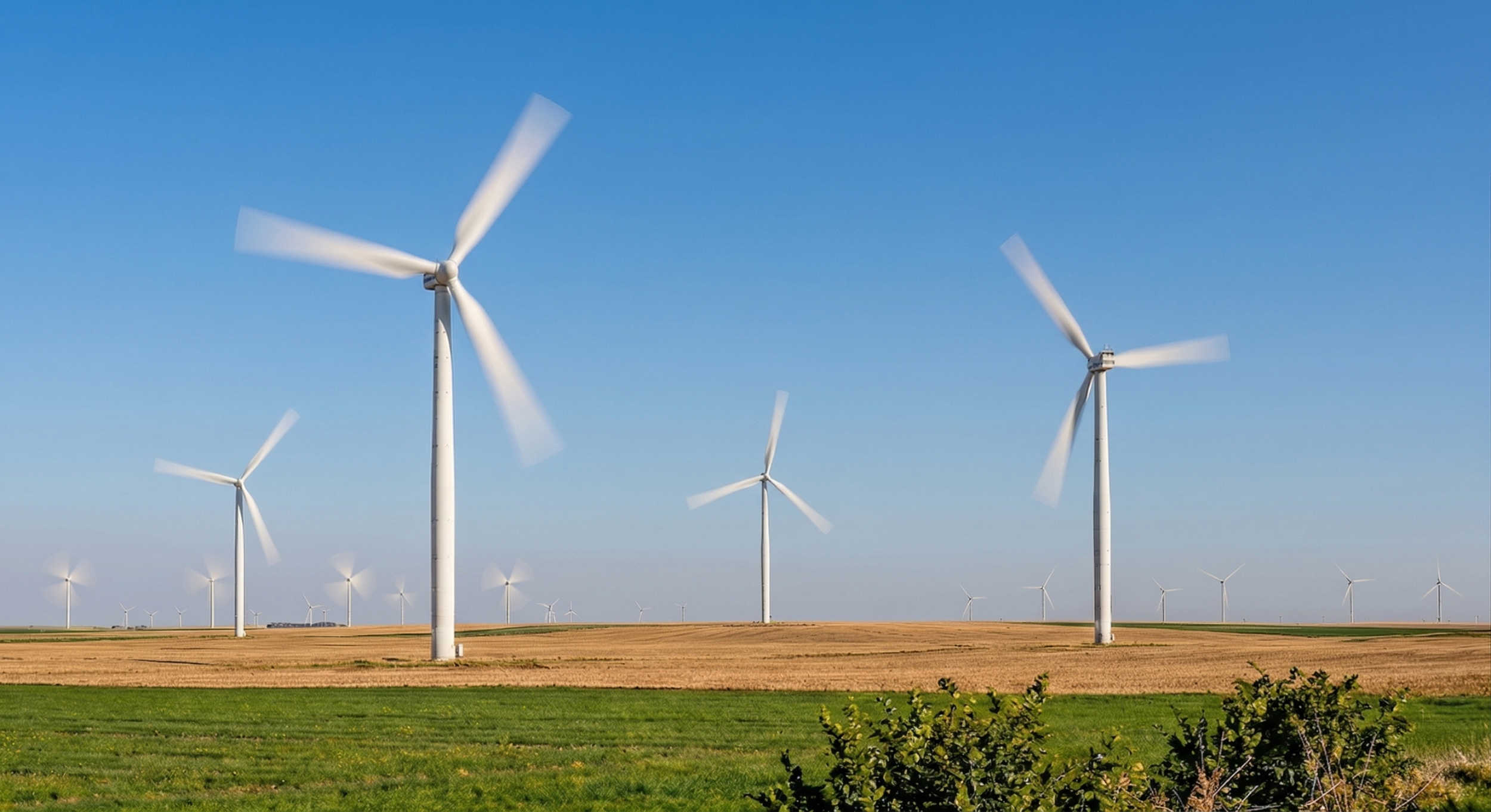
Emergency power, officially known as mFRRda (manual Frequency Restoration Reserves directly activated), is the power that TenneT deploys manually in the event of incidents and prolonged imbalances on the grid. Whilst aFRR makes continuous and automatic adjustments, emergency power is the reserve for more serious situations: a failure, a prolonged shortfall, or an unexpected peak.
It is capacity contracted in advance. It is fully available within 15 minutes and can be deployed for periods ranging from a few minutes to several hours. Emergency power regulates in both directions: increasing output in the event of a shortfall, and reducing output in the event of a surplus. The required capacity is usually between 850 and 1015 MW, depending on the period. Anyone who submits a bid and wins is paid according to the ‘paid-as-bid’ principle: you receive the price you yourself have bid.
To participate, you need flexible installations, assets that can ramp up or down a large amount of power at short notice, without disrupting your business operations.
Why is emergency power of interest to businesses?
The demand for emergency power is growing as the grid becomes more unpredictable. More renewable generation means greater fluctuations. At the same time, grid congestion limits the scope for businesses to obtain new connections or expand their existing ones. As a result, the flexibility you already have in-house becomes more valuable, not as a cost, but as a source of income.
For businesses with controllable assets, such as a CHP unit, a cooling system, a battery or crop lighting that can be timed, this creates a extra source of income.
The question isn’t whether you have flexibility, but whether you’re already making the most of it.
What do you need to provide emergency power?
To take part, your capacity must be fully available within 15 minutes and must be able to be maintained for at least 75 minutes. The minimum capacity per bid is 20 MW. For an individual company, including a large-scale consumer in the greenhouse horticulture sector or a cold store in the logistics sector for example, this is a high threshold. Most of a single company’s flexible assets do not come anywhere near this.
Pooling of assets
How do you build up substantial capital? The solution lies in pooling resources. By combining the flexibility of several companies into a single pool, the threshold becomes achievable and the bid becomes stronger.
That is precisely where the size of the pool makes all the difference. The larger and more diverse the pool of assets, the more reliable the bid and the higher the returns that can be generated.
As a company, how do I join a pool?
For businesses with controllable assets – such as a combined heat and power (CHP) plant, a cooling system, a charging station, a solar or wind farm, a battery, or crop lighting that can be timed – this creates an additional source of revenue. Participating in the emergency capacity market requires two things simultaneously. A long-term strategy: which assets to deploy, at what risk, and with what return. And day-to-day execution: making real-time adjustments based on market conditions, the weather, and the status of your installations.
Enova combines both: an energy management system that is managed on a daily basis by an energy manager who bids on three markets simultaneously.
We also deploy our pool on aFRR, the other balancing market where TenneT procures capacity. aFRR continuously adjusts based on supply and demand, and emergency capacity steps in when the grid is at real risk of becoming unbalanced. Multiple markets, one pool, various sources of income. This way, your return does not depend on how often emergency capacity is activated, but you build up a more stable return throughout the year.
Do you have a high-volume consumption connection and controllable assets in greenhouse horticulture, agriculture, logistics (with cold storage), wind or solar farms, or industry? Then the question is not whether you have flexibility, but whether you are already capitalising on it.
Ready to turn your energy into a revenue model?
Find out what active energy management yields for your business. Calculate your energypotential.
Would you like advice from our team?
Tell us who you are and we'll be in touch.